
Why Choose Our Hybrid Early Childhood Education Program
-
Flexible Hybrid Learning
Domestic students can study the academic portion of the program 100% online and complete practicum placements in their region, while international students benefit from a blend of asynchronous online learning and in-person evening classes. -
Guaranteed Practicum Placements
Guaranteed 535 hours of hands-on placement experience that we coordinate for you, allowing you to put academic theory into practice. -
Affordable Education
There are a variety of financial aid options, scholarships, and bursaries available to help you get started on your ECE career path. -
Tuition Fee Guarantee
Successfully become a licensed ECE, and if you’re unable to secure a job offer within 6 months, your tuition will be refunded providing all terms and conditions have been met.
What is an Early Childhood Educator?

An Early Childhood Educator (ECE) is a trained professional who supports the learning, development, and well-being of young children in their early years. Early Childhood Educators create safe, nurturing, and engaging environments for children while helping develop important social, emotional, and physical skills. In Canada, ECEs play a valuable role in preparing children for future success in school and in life, while supporting families and strengthening communities.
Attributes of a great ECE:
- Listens attentively, acts ethically, and implements an anti-bias approach to diversity and inclusion.
- Maintains patience and kindness for all children and their family members.
- Has a positive and professional attitude, is organized, and communicates well with children, their families, and childcare centre staff.
Where an ECE Career Can Take You
ECE Careers and Future Opportunities

In Nova Scotia, the Early Childhood Education (ECE) sector is experiencing strong demand for qualified ECEs, with employment opportunities expected to continue growing in the coming years. The Hybrid Early Childhood Education program is designed to meet the demand for qualified Early Childhood Educators in Nova Scotia by equipping you with the academic knowledge and practical skills required to succeed in the field.
Once you graduate from our Hybrid Early Childhood Education Diploma program, some popular career path options include:
- Early Childhood Educator (ECE)
- Preschool or daycare teacher
- After-school program facilitator
- Inclusion Coordinator
- Day-Home Consultant
- Assistant Director
- Home daycare provider
- Director of ECE Programs
-
Starting Potential
Level 2 ECE $56,000 CAD per year -
Job Outlook
ECEs are in high demand in Nova Scotia -
Work Settings
Childcare centres, pre-primary programs, regulated home daycares, special needs providers
Early Career (0-2 years)
- 56,000 - 58,000 CAD
- ECE in Pre-Primary
- Early Childhood Educator
- Inclusion Coordinator
- Day Home Operator
- Open or Manage Own Regulated Daycare
- Further Training / Qualifications: ECE Diploma
Advanced Career (5-10 years)
- 60,000 - 74,000 CAD
- Assistant Director
- Director
- ECE College Instructor
- Further Training / Qualifications: Early Childhood Administration Course and Train-the-Trainer / Adult Education Certificate (required for instructor roles)
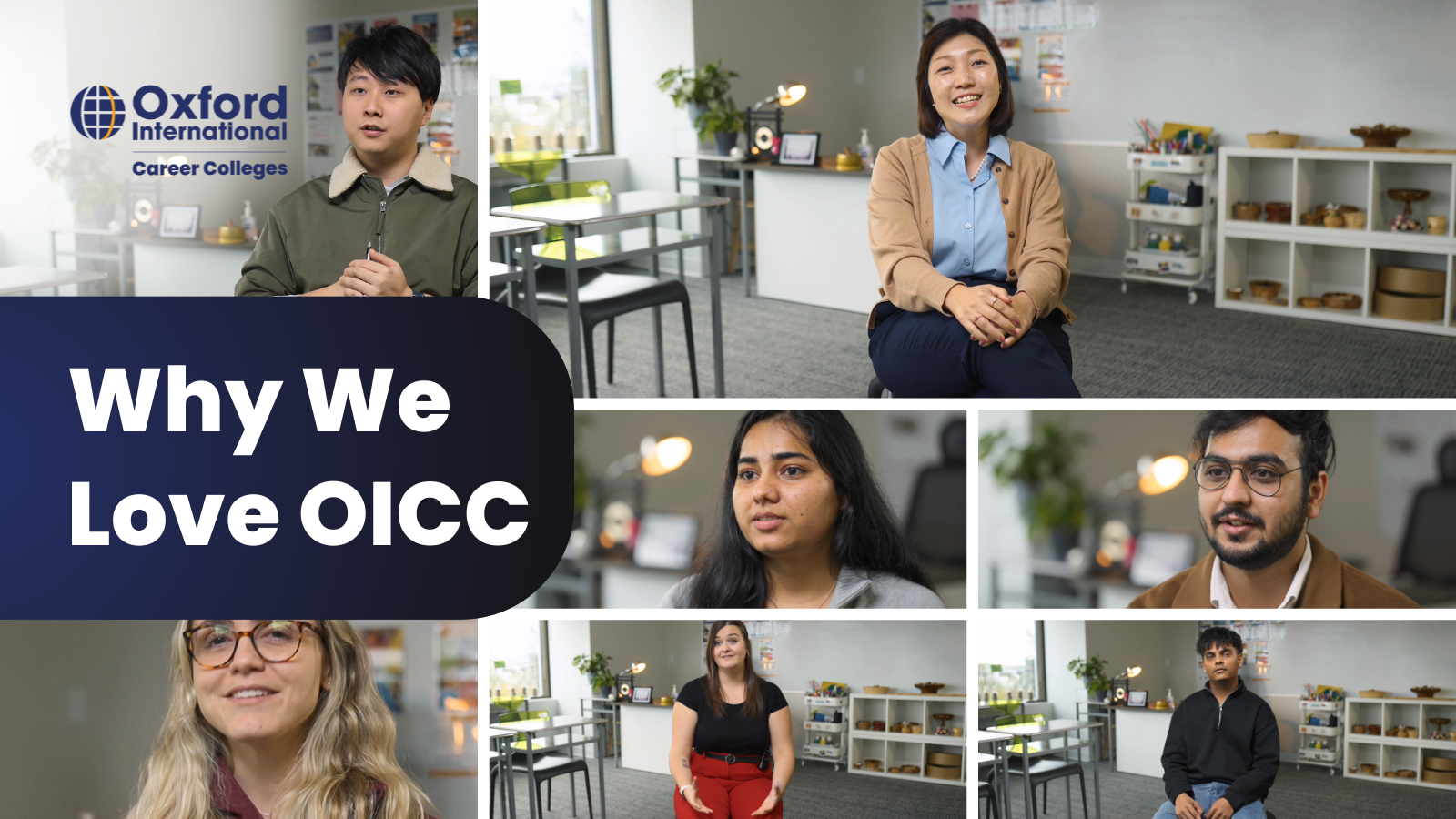
What Our Students Say About Us
ECE Scholarships and Funding
Scholarships
Government Bursaries
Financial Aid
Tuition Payment Plans
| Domestic Students | ||
|---|---|---|
| Installment 1 | 10% | Before program start date |
| Installment 2 | 20% | 15% of program completion |
| Installment 3 | 20% | 30% of program completion |
| Installment 4 | 20% | 45% of program completion |
| Installment 5 | 15% | 60% of program completion |
| Installment 6 | 15% | 75% of program completion |
| International Students | ||
|---|---|---|
| Installment 1 | 50% | Before program start date |
| Installment 2 | 12.5% | 10% of program completion |
| Installment 3 | 12.5% | 25% of program completion |
| Installment 4 | 12.5% | 40% of program completion |
| Installment 5 | 12.5% | 50% of program completion |
Hybrid ECE Program Courses
Guaranteed Practicum Placements
During the Early Childhood Education (ECE) program, you get the valuable opportunity to put academic theory into practice in real workplace settings through four guaranteed practicum placements (535 hours) in daycare and pre-primary program providers. During your practicum placements, you will learn how to interact with, support, and plan activities for young children.
- Practicum 1 (60 hours): Observation, interacting with children, and getting comfortable.
- Practicum 2 (135 hours): Observation, begin implementing activities, and get comfortable with play-based curriculum.
- Practicum 3 (140 hours): Working directly with ECEs and children, doing all tasks of the classroom.
- Practicum 4 (200 hours): Become a fully-integrated team member in the childcare classroom and demonstrate skills and abilities that align with the expectations of a qualified ECE.
Certificates and Memberships
Mandatory Certificates
- Standard First Aid (Level C CPR & AED)
- Occupational Health and Safety (OHS)
- Workplace Hazardous Materials Information System (WHMIS)
- Food Safety
- Child Abuse Protocol Training
Additional Certificates
- Circle of Security Parenting (COSP): to learn how to follow the cues of children, helping build secure attachments and positive relationships.
- The Pyramid Model Consortium – Trauma-Informed Care: to learn how to understand a child's lived and family experiences in order to provide the most effective care.
Hybrid Learning Model
| Day | Domestic Students | International Students |
|---|---|---|
| Monday | Asynchronous (self-paced) | Asynchronous (self-paced) |
| Tuesday–Friday | Live online classes 6:00–9:30 pm AST | In-person evening classes 6:00–9:30 pm AST |
Domestic students (Canadian citizens and permanent residents) can choose to study tge academic portion of the program 100% online and practicum placements and certifications can be completed in your region.
The hybrid program format is ideal for:
- Working professionals looking to upskill or transition to a new career
- Parents or caregivers who need daytime flexibility
- International students who prefer a balanced learning structure
- ECE Level 1 professionals who want to upgrade to Level 2 while continuing their daytime employment. There are also transfer credits and discounts available for those that are upskilling.
Student & Instructor Stories
Discover Oxford International Career Colleges Halifax campus - where careers and community come together. Because we care.
This video is served by YouTube and may use cookies, please accept the cookies to play the video.

ECE Program Fees
| Program Fees for Domestic Students | ||||
|---|---|---|---|---|
| Tuition | Application | Materials | Administration | Total |
| $13,250 | $100 | $2,000 | $150 | $15,500 |
| Program Fees for International Students | |||
|---|---|---|---|
| Tuition | Application | Materials | Total |
| $18,000 | $1,000 | $2,000 | $21,000 |
Admission Requirements
Applicants are required to provide academic documents that demonstrate one of the following:
- Canadian Grade 12 Certificate, Diploma, or GED
- International Grade 12 or higher with translations
Applicants need to provide two references that document 25 hours of experience working with children. This can be in paid or unpaid positions, such as babysitting. These two references also need to detail your emotional maturity and suitability for the Early Childhood Education field.
All programs are delivered in English. Proof of English proficiency can be demonstrated through one of the following:
- English competency testing (valid for 2 years)
- Academic IELTS 5.5 (no band below 5.5)
- Academic IELTS 5.5 (one band at 5.0) + 5 weeks of UCP 400
- General IELTS 6.0 (no band below 6.0)
- ELLT Level 5 (no band below 5)
- ELLT Level 5 (one band at 4) + 5 weeks of UCP 400
- CLB 8
- CELBAN Level 7
- CELPIP Level 7
- TOEFL IBT 78
- Pearson PTE Academic minimum score 55 (no band below 50)
- Duolingo 95 (no sub score below 95)
- Oxford International Halifax UCP 400
- Oxford International Digital Institute (OIDI) Pathways English Online (PEO) for Higher Education Canada – Undergraduate level
- Unaccommodated Canadian Grade 12 Certificate, Diploma, GED or CAEC (minimum score of 60)
- Completed at least two years in an accredited high school offered in English.*
- International Baccalaureate Diploma Programme (DP) and Career-related Programme (CP)
- English A Literature Level 5
- English A Language and Literature Standard Level 5/Higher Level 4
- English B Language Acquisition Standard Level 6/Higher Level 5
- Minimum two years of consecutive full-time academic study where the language of instruction is English are exempt from supplying an English proficiency exam for admission. Credential evaluation document required (for example, WES, ICAS).
- Two years of full-time academic study in the following countries where the language of instruction is English: Antigua, Australia, Bahamas, Barbados, Belize, Bermuda, Botswana, Canada, Gambia, Ghana, Grand Cayman Islands, Grenada, Republic of Ireland, Jamaica, Kenya, Lesotho, Liberia, Malawi, New Zealand, Nigeria, Northern Marianas, Palau, Papua New Guinea, Philippines, Rwanda, Sierra Leone, South Africa, St Kitts, St Lucia, St Vincent & Grenadines, Swaziland, Tanzania, Trinidad and Tobago, Uganda, United Kingdom, United States, Virgin Islands, Zambia, Zimbabwe.
*Students are required to provide proof that the medium of instruction (MOI) was English. An accepted MOI is to be provided with the school stamp.
Additional requirements:
- Attend a pre-screening interview
- Child Abuse Registry Check
- Criminal Record Check (translated if necessary) and valid within 6 months
- COVID vaccination status on file
- Copy of your passport
For Domestic applications (out of province):
As a condition of admission to the Early Childhood Education (ECE) program, all out-of-province applicants must submit a Vulnerable Sector Check (VSC) from the province in which they currently reside. In addition, provincial industry regulations require all students to obtain a Nova Scotia Vulnerable Sector Check. The Nova Scotia VSC must be completed at the student’s own expense, and students are responsible for any associated costs.
For International applicants:
- Study Permit visa
- Canadian Criminal Record Check with a Vulnerable Sector Search if you have been residing in Canada for more than 6 months
- Criminal Record Check / Police Clearance Certificate from your home country if you are residing outside of Canada
- A Vulnerable Sector Search once you enter in Canada
Getting your visa sorted is an important part of your journey to OICC Halifax campus.
The Canadian government sets the rules for visa applications, acceptance, and costs. Because you’ll need to be in Canada at the start of your program, you should apply for a visa to study as soon as you can. If you are bringing family with you, they will likely need tourist visas.
Your visa determines when you can enter the country, how long you can stay after you graduate, and how many hours you can work while you’re in Canada. To support your visa application, we will issue you a formal Letter of Admission (LoA) and Provincial Attestation Letter (PAL) showing that you intend to join our Hybrid Early Childhood Education Diploma program. OICC | Oxford International Career Colleges Halifax campus (formerly East Coast International College) is recognized as a Designated Learning Institute (DLI) and you should quote our DLI number of O267638647882 on your visa applications.
You should consult a qualified Canadian immigration consultant if you are unclear about what you must do when you apply for a visa. To assist you with this process, Oxford International Career Colleges has partnered with a local Immigration firm led by a licensed Regulated Canadian Immigration Consultant (RCIC).
The Oxford International Career Colleges (OICC) Tuition Fee Guarantee for the Early Childhood Education Diploma programs is applicable to all students. Note that an offer of employment does not guarantee approval for the Nova Scotia Nominee program, Graduates in Demand program, or any other Nova Scotia Immigration stream – it’s just one of the conditions that must be met. Some of the other conditions include sufficient settlement funds and a salary that will support your family. You can review all conditions on the Graduates in Demand website. Acceptance to the Nova Scotia Nominee program does not guarantee that a work permit will be issued by IRCC or that you will be approved for Permanent Residency.
To remain eligible for the Tuition Fee Guarantee, participants must meet the following conditions within six (6) months of graduating from the ECE programs:
1. Attendance & Academic Performance [1]
- Attendance: Maintain a minimum 90% attendance throughout the program, including all practicum placements. [2]
- Academic Performance: Achieve passing grades of 70% or higher in all written and practical components of the program.
2. Receive satisfactory evaluations from all practicum placement providers.
3. Demonstrate respectful and professional conduct with senior residents from diverse ethnic, gender, and sexual backgrounds.
4. Actively participate in Career Services throughout the 6-month post-graduation period, including at least one (1) workshop and at least three (3) one-on-one sessions, or until a job offer is received [3].
5. Participate in all assigned check-ins initiated by the school’s Career Services team.
6. Attend a minimum of three (3) in-person job interviews [4], including at least:
- One with a rural employer, and
- Two others, with one being from a practicum placement provider [5].
8. Understand that if you receive a job offer within the 6-month period, you are no longer eligible for the Tuition Fee Guarantee.
Please see the Tuition Fee Guarantee policy for full details and a list of non-refundable fees.
[1] If a student has at least 2 warnings (for example, either one from attendance and one (1) from academic performance; two (2) from attendance or two (2) from academic performance) they are not eligible for the tuition fee guarantee. The warnings are for both in-school or in placement components of the program.
[2] Missed attendance due to medical reasons is excluded; however, participants must have provided proper documentation.
[3] Oxford International Career Colleges – Career Services is not responsible to set up interviews on the student’s behalf. This includes sending resumes or directly contacting employers. All interviews must be secured by the student.
[4] On-the-spot interview(s) at a Job Fair does not qualify as a job interview.
[5] Evidence of the interview taking place (i.e., confirmation email from the employer that the interview took place, email follow up
email from the interviewee thanking them for the interview, etc.) must be submitted.
Hybrid ECE Program Start Dates
| Column 1 | Column 2 | Column 3 |
|---|---|---|
| row 1 | row 2 | row 3 |
OICC Halifax Campus Life
Build your future in Halifax, Nova Scotia, where strong career opportunities, a welcoming community, and an exceptional lifestyle are found. Situated in the heart of downtown, just steps from the Halifax waterfront and ferry terminal, our OICC Halifax campus provides students with easy access to city services and bright and modern learning spaces.
With a focus on hands-on learning, our Halifax campus is designed to help students develop the skills and confidence needed for future ECE career success.
This video is served by YouTube and may use cookies, please accept the cookies to play the video.
FAQs
Yes. If you are a domestic student or a permanent resident (PR) of Canada, you may be eligible to open and operate your own home daycare after graduation, provided you meet your province's licensing and regulatory requirements.
Yes. Domestic students and permanent residents can complete the academic portion of the Early Childhood Education (ECE) program online while completing their practicum in their local community. This allows students to gain hands-on experience without needing to relocate.
Yes, many students are able to work while studying the Early Childhood Education (ECE) program, depending on their student status and schedule.
International students may be eligible to work off-campus if they meet Canadian study permit requirements and maintain full-time enrollment at a designated learning institution.
While wages vary, Early Childhood Educators in Nova Scotia earn an average annual salary of approximately $56,000–$58,000 CAD, according to government labour market data. Actual earnings may vary depending on your experience, employer, job role, and location.
Through Oxford International Career Colleges' Halifax campus, students can choose from two affordable accommodation options:
- HI Halifax Heritage House Hostel: Stay in a shared or private room in a central Halifax location, just minutes from the waterfront, shops, restaurants, and public transit.
- Homestay: Experience Canadian culture by living with a welcoming local host family. Choose from full-board, half-board, or room-only options based on your needs.
Our ECE Diploma program allows you to level up and further your career opportunities.
If you have an entry level or Level 1 classification: You may have the ability to transfer up to 7 courses and 2 practicums (eligible based on assessment applies). Otherwise, you will be required to take the full program and complete all courses and practicums. Once you graduate, you will have earned your ECE Level 2 classification.
If you have an equivalent Canadian university degree: Upon successful completion of our program, you will be eligible to apply for a Level 3 ECE classification.
Our Early Childhood Education Diploma program qualifies graduates to work with children in daycare and pre-primary settings in Canada.
As an international student, when you graduate from the Early Childhood Education Diploma program, you can access various immigration programs available.
With job prospects for Early Childhood Educators looking to be very good over the next three years, the highest rating through the Government of Canada Labour Market Information, and demand for qualified ECEs expected to grow even more, your career opportunities will continue to grow.
While each immigration program operates differently and has requirements beyond completing Canadian studies, the programs listed below may provide international student graduates with accelerated pathways to becoming Canadian permanent residents:
- International Graduates in Demand Stream
- Nova Scotia Nominee Program
- Atlantic Immigration Program
- Canadian Experience Class
- Federal Skilled Worker Program
Please visit the Government of Canada website for all available immigration programs and details on eligibility and requirements.
In Nova Scotia’s Early Learning and Child Care classification system, a Level 2 ECE classification is issued by the provincial government to early childhood educators who have completed a recognized post-secondary Early Childhood Education diploma program or equivalent approved training.
Level 2 classification indicates that an educator has met the provincial standards to work in licensed child care settings in a trained educator role and is eligible to contribute to staffing requirements in regulated early learning environments.
This classification is part of Nova Scotia’s system that includes Entry Level, Level 1, Level 2, and Level 3 designations, which are based on education, training, and demonstrated professional competencies.
The Hybrid ECE program offers flexible evening classes with a combination of synchronous (live) and asynchronous (self-paced) learning. International students complete their studies on campus, while domestic students study online. The program duration is approximately 55 weeks.
The Daytime ECE program is delivered in a traditional in-person classroom format and is typically completed in 50 weeks.
Both the Hybrid and Daytime ECE programs include a practicum component, providing students with hands-on experience in real early learning environments.
In order to apply to our Early Childhood Education (ECE) Diploma program, please fill out an online application. Once you submit your application, our Admissions team will be in contact with you within a few days to confirm the next steps.
If you aren’t sure that you can meet the admission requirements for the program, we recommend you connect with your Oxford International representative to learn more. If you do not have the English levels required, OICC Halifax campus offers pre-sessional English programs that provide direct entry to the ECE program.
The ECE Hybrid program is 30% online, 70% in-person for international students or 100% online for domestic students.
Mondays: 6 hours of learning at your own pace. The 6 hours of course content can be completed on the previous Saturday or Sunday as well.
Tuesdays – Fridays: Live lectures in-person at OICC Halifax campus or online (domestic students only) from 6:00pm – 9:30pm AST.
You can find opportunities in public and private child care centres, preschools, family resource centres, and after-school programs across Canada.
Credentials & Partners
This program is not eligible for the Post-Graduation Work Permit (PGWP).
Other Programs in Halifax, Nova Scotia
Continuing Care Assistant (CCA) Certificate
Build the knowledge and skills required to become an in-demand and certified CCA in Halifax, Nova Scotia.
- Duration 26 weeks
- Campus Halifax
- Schedule Afternoon | 2:00 PM - 9:00 PM AST ,Morning | 8:30 AM - 3:30 PM AST
- Start date 2026, 2027, April 5, August 23, August 24, December 7, January 25, July 19, June 14, March 1, May 10, October 26, September 21
Early Childhood Education (ECE) Diploma
Develop the skills and knowledge required to make a positive and lasting impact on young children’s lives in Halifax, Nova Scotia.
- Duration 50 weeks | 1605 hours
- Campus Halifax
- Schedule Monday - Friday | 8:00 AM - 4:30 PM AST
- Start date 2026, 2027, April 12, August 17, August 8, December 7, February 15, June 7