
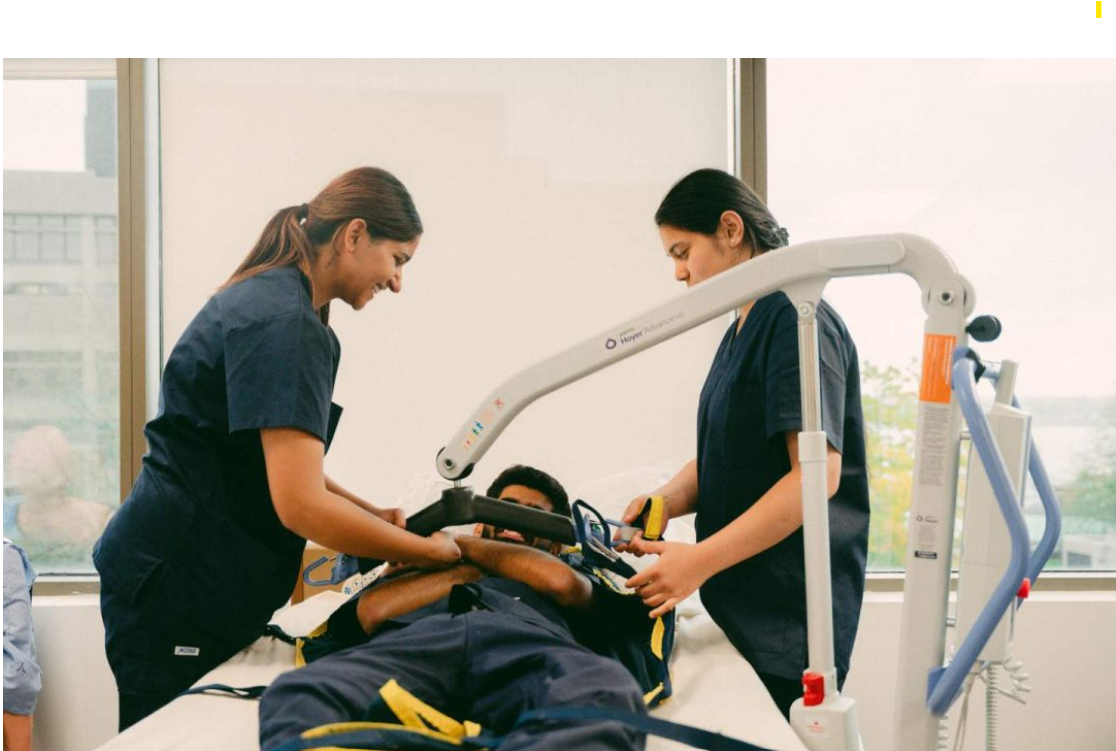


Continuing Care Assistants (CCAs) are in high demand across Nova Scotia’s healthcare system. With strong job prospects, government incentives, and growing needs in elder care, this field offers excellent opportunities for stable, meaningful employment.
If you’re looking for a career that combines compassion with purpose, becoming a Continuing Care Assistant (CCA) might be one of the most fulfilling paths you can take. CCAs play a vital role in Nova Scotia’s healthcare system, providing essential care to seniors, patients, and individuals with chronic illnesses.
Every day, they help people maintain their dignity, independence, and comfort, whether in long-term care facilities, hospitals, or home care settings. The rewards are more than professional; they’re personal, too. You’ll finish each day knowing that you’ve made someone’s life better.
If that sounds like the difference you want to make, the Continuing Care Assistant program at Oxford International Career Colleges is the perfect place to start. Here’s why you should consider this career path.
Why Should I Be a Continuing Care Assistant?
Why should I be a CCA? Becoming a continuing care assistant means joining one of Nova Scotia’s most in-demand and meaningful professions. With the province experiencing an ongoing shortage of CCAs and growing needs in long-term care and home support, trained professionals are needed now more than ever.
If you’re wondering whether you have what it takes to succeed, explore the “10 Qualities You Need to Succeed as a CCA“. Compassion, patience, and communication are just the beginning of what makes CCAs stand out in healthcare.
Is It Worth It Being a CCA?
Training to become a CCA is also the perfect stepping stone to the Licensed Practical Nurse (LPN) 2-year or Registered Nurse (RN) 4-year BScN programs. Oxford International Career Colleges graduates have said that training and working as a CCA gave them the foundational training to step into these licensed roles and gave them a greater understanding and appreciation of healthcare overall. At this current time, Nova Scotia is piloting bridging programs for CCA to LPN and LPN to RN.
Many students discover that starting as a CCA gives them the hands-on experience and confidence to advance into other healthcare roles later on. The best part? It’s a role where you can see the results of your work every day, in smiles, gratitude, and improved quality of life.
For more inspiration, check out “10 Reasons to Pursue a Career in Healthcare” and see how your CCA journey can be the first step in a lifelong healthcare career.
How Long Does It Take to Become a CCA?
Across Nova Scotia, the new curriculum allows you to complete your Continuing Care Assistant training in 6 months. The Continuing Care Assistant program at Oxford International Career Colleges is designed to help you gain both the theoretical knowledge and practical experience employers look for in just 26 weeks.
Through classroom instruction and guaranteed supervised clinical placements, students learn key areas such as:
- Personal and palliative care
- Social and mental well-being
- Mealtime assistance
- Medication
- Safe handling and mobility
Career Outlook for CCAs in Nova Scotia
In Nova Scotia, the demand for Continuing Care Assistants (CCAs) is strong and continues to grow. Labour forecasts the employment outlook as very good, with increasing opportunities in long-term care, home care, and community agencies.
This need translates into job security and steady career potential. Many graduates find work soon after finishing their studies, sometimes at the same sites where they completed practicums. With the province expanding elder care and offering tuition support for new CCAs, now is an excellent time to join this rewarding field.
Start Your Journey with OICC
At Oxford International Career Colleges, we believe education should empower you to make a difference. The Continuing Care Assistant Program provides the training and confidence to succeed in a growing, essential profession.
Our students learn from experienced instructors who bring real-world expertise into the classroom, and our supportive learning environment ensures you’re ready to transition seamlessly from student to professional.
If you’re ready to start a career where compassion meets opportunity, becoming a Continuing Care Assistant is one of the strongest choices you can make, for your community, your career, and your future.
Are you looking for a comprehensive Continuing Care Assistant Program?
Contact OICC for more information.
This blog was published by skothari.
Enhance Your English Skills with Oxford International
Checkout our other articles
Why Continuing Care Assistants are Essential to Quality Care
- Published on: 30 June 2026
- Author: By Nhadkar
Continuing Care Assistants (CCAs) are vital members of the healthcare team. They provide hands-on support with daily living, comfort, and emotional care, helping ensure safety, dignity, and quality of life for patients in long-term and community settings. Without their daily presence and compassionate care, healthcare systems would struggle to meet the needs of aging and vulnerable populations.
NH TEST 2
- Published on: 30 June 2026
- Author: By Nhadkar
Lorem ipsum dolor sit amet. Lorem ipsum dolor sit amet, consectetur adipiscing elit.Pellentesque nisi erat, dapibus a interdum sit amet, lobortis vel nunc.Phasellus id euismod tortor, ut efficitur enim. Donec tincidunt mollis placerat Lorem ipsum dolor sit amet. Lorem ipsum dolor sit amet, consectetur adipiscing elit.Pellentesque nisi erat, dapibus a interdum sit amet, lobortis vel […]